Israel, a country where ancient history meets vibrant modernity, offers international students a unique opportunity to explore diverse landscapes and rich cultural heritage. The good news? You don’t need a car to experience the country’s beauty. Israel’s compact size and well-developed public transportation system make it an ideal destination for students to explore during weekends or between classes. This guide will help you navigate Israel using buses, trains, and other public transportation options, allowing you to discover breathtaking destinations while staying within a student budget.
Introduction: Discovering Israel Without a Car
For international students studying abroad in Israel, exploring the country is an essential part of the experience. While some might consider renting a car, Israel’s comprehensive public transportation network offers a more affordable and environmentally friendly alternative. Using public transport also provides a genuine insight into local life and culture, allowing you to interact with Israelis and practice your Hebrew skills.
Israel’s public transportation system connects all major cities and tourist destinations, making it possible to reach most attractions without a vehicle. From Jerusalem’s ancient streets to Tel Aviv’s beaches, from the lush greenery of the Galilee to the stark beauty of the Negev desert – all are accessible via buses, trains, or a combination of both.
As a student, traveling by public transport not only saves you money but also eliminates the stress of navigating unfamiliar roads and finding parking in congested urban areas. Plus, you can use the journey time to catch up on reading or simply enjoy the passing landscapes.
Essential Travel Apps and Resources for Public Transport in Israel
Before embarking on your explorations, equip yourself with these essential digital tools that will make navigating Israel’s public transportation system much easier:
- Moovit – The most popular transportation app in Israel, offering real-time updates for buses and trains with accurate arrival times
- Israel Railways App – Essential for train travel, providing schedules, platform information, and the ability to purchase tickets
- Google Maps – Works well for general navigation in Israel and integrates public transportation options
- Rav-Kav Online – Allows you to manage your Rav-Kav (public transportation payment card) and reload it electronically
Additionally, make sure to get a Rav-Kav card as soon as possible. This reloadable transportation card works across all public transportation in Israel and offers discounted fares compared to single-ride tickets. International students are eligible for student discounts on public transportation, so bring your student ID when purchasing your Rav-Kav.
Jerusalem: Historical Sites Accessible by Light Rail and Buses
Jerusalem, with its rich historical and religious significance, should be at the top of your exploration list. The city’s light rail system and extensive bus network make it easy to navigate without a car.
Old City and Surrounding Areas
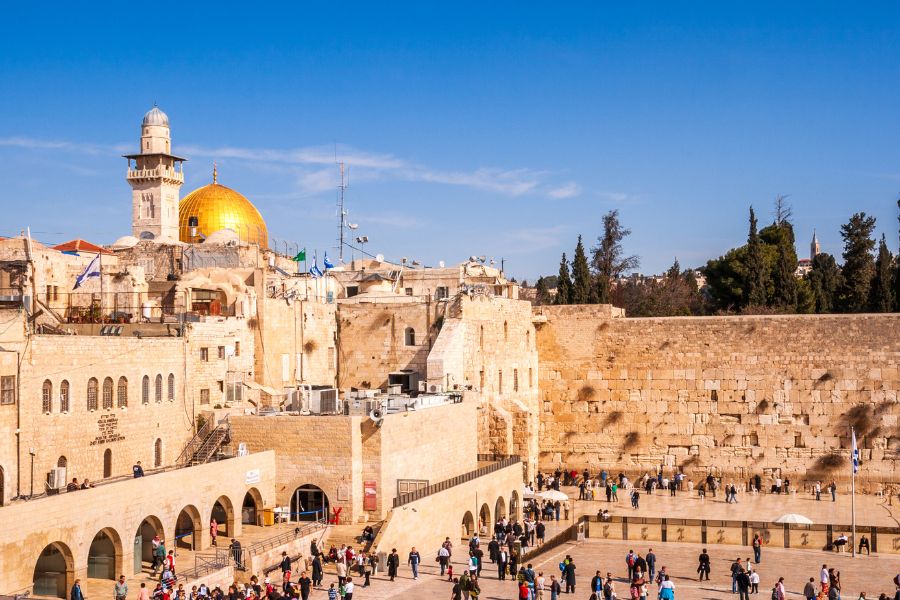
The Old City of Jerusalem is the spiritual and historical heart of Israel. To reach this UNESCO World Heritage site, take the light rail to the “City Hall” (Safra Square) station and walk about 5-10 minutes to Jaffa Gate, or alight at Damascus Gate station for direct access to the Muslim Quarter.
Inside the Old City, you’ll find the Western Wall, the Church of the Holy Sepulchre, and the Dome of the Rock – all within walking distance of each other. While exploring the narrow streets and bustling markets, remember that the Old City is best experienced on foot, as no public transportation runs within its ancient walls.
From the Old City, bus lines 99 and 38 can take you to the Mount of Olives for panoramic views of Jerusalem. This location is particularly beautiful at sunrise or sunset when the ancient city is bathed in golden light.
Modern Jerusalem Attractions
The light rail connects many of Jerusalem’s modern attractions. For the Mahane Yehuda Market (locally known as “The Shuk”), exit at the market’s namesake station. This vibrant market offers a sensory overload of colors, aromas, and flavors that showcase Israel’s diverse culinary traditions.
To visit the Israel Museum, home to the Dead Sea Scrolls and an extensive collection of archaeological artifacts, take bus lines 9, 17, or 99 from the central bus station. Students interested in biblical studies will find this museum particularly fascinating.
For Yad Vashem, Israel’s Holocaust memorial, take the light rail to Mount Herzl station, then transfer to bus 27. This powerful and moving site provides important historical context for understanding modern Israel.
Tel Aviv and Surroundings: Coastal Exploration by Bus and Train
Tel Aviv, Israel’s vibrant cultural and economic hub, offers a completely different experience from Jerusalem. The city’s excellent public transportation system includes buses, shared taxis (sherut), and bicycle rentals.
Tel Aviv’s Cultural and Historical Sites
Start your exploration in Jaffa, one of the world’s oldest ports. Take bus lines 10, 18, or 25 to reach this ancient area now famous for its artist quarter, flea market, and picturesque alleyways. The contrast between ancient Jaffa and modern Tel Aviv creates a fascinating urban landscape.
For a dose of culture, visit the Tel Aviv Museum of Art by taking bus lines 9, 18, or 28. Afterward, explore the White City, a UNESCO-recognized collection of over 4,000 Bauhaus buildings, easily accessible by walking or taking bus 5 along Rothschild Boulevard.
The bustling Carmel Market offers a true Israeli experience. Take bus 16 or 204 to immerse yourself in the sights, sounds, and tastes of this vibrant marketplace. Here, you can practice your bargaining skills while shopping for fresh produce, spices, and local street food.
Beach Hopping Along the Mediterranean
Tel Aviv’s Mediterranean coastline features a string of beautiful beaches, each with its own character. The promenade (Tayelet) runs along the entire coastline, making it easy to walk from one beach to another.
- Gordon Beach – Popular with tourists and locals alike, accessible via bus lines 4, 5, 104
- Frishman Beach – Known for its relaxed atmosphere, reached by bus lines 5, 38, 39
- Alma Beach – Quieter option south of the main strip, take bus 10 or 18
For a day trip from Tel Aviv, consider visiting Herzliya or Netanya. Both coastal cities are easily accessible via Israel Railways trains from Tel Aviv’s stations and offer beautiful beaches with a more relaxed atmosphere than Tel Aviv’s often crowded shoreline.
Northern Israel: Nature and History by Bus
The verdant hills of northern Israel provide a stark contrast to the urban environments of Tel Aviv and Jerusalem. While public transportation is less frequent here, the region is still accessible for students spending a gap year in Israel or those with a free weekend.
Haifa and the Carmel
Haifa, Israel’s third-largest city, is built on the slopes of Mount Carmel. The city is home to the stunning Bahá’í Gardens, a UNESCO World Heritage site featuring terraced gardens extending up the mountain.
To reach Haifa from Tel Aviv or Jerusalem, take Israel Railways trains that run regularly throughout the day. The journey from Tel Aviv takes approximately one hour, while from Jerusalem it’s about two hours with a connection.
Once in Haifa, use the unique Carmelit – Israel’s only subway and one of the world’s shortest – to navigate the steep slopes of Mount Carmel. Bus lines 115, 136, and the tourist line 30 will take you to the entrance of the Bahá’í Gardens. From there, you can join a free guided tour (offered daily except Wednesdays) to fully appreciate this architectural marvel.
Galilee and Golan Heights
The Galilee region, with its lush landscapes and historical sites, requires more planning when using public transportation but rewards visitors with breathtaking scenery.
To visit Nazareth, take a direct bus from Jerusalem (line 955) or Tel Aviv (line 826). The journey takes approximately two hours. In Nazareth, explore the Basilica of the Annunciation and the vibrant old city market, both accessible on foot from the central bus station.
For nature lovers, the Sea of Galilee (Kinneret) offers beautiful landscapes and historical sites. Take a train to Akko (Acre) from Tel Aviv or Haifa, then bus 150 to Tiberias. From there, local buses connect to sites around the lake, including Capernaum and the Mount of Beatitudes.
Students interested in Jewish studies will find the ancient city of Tzfat (Safed) particularly meaningful. To reach this center of Jewish mysticism, take bus 500 from Haifa’s Merkazit HaMifratz station or bus 511 from Tiberias.
Southern Israel: Desert Adventures via Public Transport
Israel’s southern region offers dramatic desert landscapes and unique natural phenomena. While more challenging to explore without a car, several key destinations are accessible via public transportation.
Masada and the Dead Sea
No visit to Israel is complete without experiencing the Dead Sea, the lowest point on Earth, and Masada, an ancient fortress with a dramatic history. To reach these sites in one day:
From Jerusalem, take bus 486 directly to Masada (approximately 1.5 hours). After exploring this UNESCO World Heritage site, continue to the Dead Sea by taking bus 486 or 444 to Ein Bokek beach (30-40 minutes).
At the Dead Sea, enjoy the surreal experience of floating effortlessly on the mineral-rich waters. Most beaches have facilities for rinsing off the salt afterward. Remember to bring water shoes, as the salt crystals on the shoreline can be sharp.
To return to Jerusalem, take bus 444 or 486 from Ein Bokek. The last bus usually leaves in the early evening, so check the schedule carefully to avoid being stranded.
Eilat and the Red Sea
Eilat, Israel’s southernmost city, offers stunning coral reefs, desert landscapes, and a relaxed atmosphere. While distant from central Israel, it’s accessible by public transportation.
The most convenient way to reach Eilat is by taking a direct bus from Tel Aviv (line 390) or Jerusalem (line 444). The journey takes approximately 5 hours, with buses running several times daily. For international MBA students with limited time, consider the domestic flights from Tel Aviv’s Sde Dov airport to Eilat’s Ramon Airport, which take about an hour.
Once in Eilat, local buses connect the city center with beaches and attractions. The small size of the city also makes walking or cycling viable options for getting around.
Weekend Travel Tips: Navigating Shabbat Transportation Limitations
One of the most important aspects of planning travel in Israel is understanding Shabbat (Saturday) transportation limitations. From Friday afternoon until Saturday evening, most public transportation services cease operations in observance of the Jewish Sabbath.
To navigate this weekly transportation gap, consider these alternatives:
- Sherut – Shared taxis that operate on fixed routes and continue service during Shabbat in some areas
- Pre-booked taxis – More expensive but available throughout Shabbat
- Ride-sharing apps – Services like Gett and Uber operate during Shabbat in most cities
- Bicycle rentals – Available in Tel Aviv and other major cities
In Tel Aviv, public transportation runs on Shabbat through the “We Move on Weekends” initiative, offering free transportation on select routes. Jerusalem, however, observes Shabbat strictly, with virtually no public transportation available.
For international students at Bar-Ilan University, it’s advisable to plan weekend excursions carefully. Consider staying overnight in your destination if traveling on Friday, or leaving early Sunday morning instead.
Budget-Friendly Travel Tips for Public Transportation in Israel
Exploring Israel on a student budget is entirely possible with these cost-saving strategies:
- Rav-Kav with student profile – Provides 50% discount on most public transportation with valid student ID
- Multiple-ride tickets – Purchase these for frequently used routes for significant savings
- Israel Pass – Considers this tourist transportation card if planning extensive travel within a short period
- Free walking tours – Available in Jerusalem, Tel Aviv, and other major cities
- Student discounts – Many attractions offer reduced rates for students with international student cards
For meals while traveling, consider packing sandwiches or shopping at local markets rather than dining at restaurants. Street food like falafel and shawarma offers delicious, authentic cuisine at reasonable prices.
Students participating in short-term exchange programs can optimize their limited time by focusing on regional explorations rather than trying to see the entire country.
Conclusion: Embracing the Journey Through Israel’s Public Transportation
Traveling through Israel by public transportation offers more than just a way to get from point A to point B—it provides a window into the country’s culture, people, and everyday life. From the animated conversations on local buses to the diverse passengers on the Jerusalem light rail, these journeys become part of your Israeli experience.
For international students, navigating Israel’s public transportation system builds confidence and independence while creating opportunities for authentic interactions with locals. You’ll discover hidden gems that might be missed when traveling by car and develop a deeper appreciation for the country’s geographical diversity—all while keeping your carbon footprint and expenses low.
As you study in Israel, make the most of your weekends and breaks by exploring this fascinating country through its public transportation network. The combinations of ancient history, diverse cultures, stunning landscapes, and modern innovations make Israel a uniquely rewarding destination for student travelers.
For more information about studying at Bar-Ilan University’s International School and experiencing Israel firsthand, visit our website and begin your journey toward academic and personal discovery in the heart of the Middle East.