When studying abroad in Israel, you’re not just gaining academic knowledge—you’re immersing yourself in one of the world’s most diverse and exciting food cultures. Israel’s culinary landscape offers a vibrant playground for food enthusiasts, with abundant options for every dietary preference, from kosher requirements to plant-based diets. This guide will navigate you through Israel’s rich culinary tapestry, helping international students make the most of their gastronomic journey while studying in this culinary hotspot.
Introduction to Israeli Cuisine: A Cultural Melting Pot
Israeli cuisine represents a fascinating fusion of flavors, techniques, and ingredients from around the world. This culinary diversity reflects Israel’s unique position as a homeland for Jewish immigrants from over 70 countries, alongside its location at the crossroads of Europe, Asia, and Africa. The result is a dynamic food culture that continues to evolve while honoring its multicultural roots.
Historical Background of Israeli Food
Modern Israeli cuisine draws from ancient traditions while incorporating contemporary innovations. Biblical foods like olives, dates, pomegranates, and wheat still feature prominently on Israeli tables. Sephardic Jews brought Mediterranean and North African influences, while Ashkenazi traditions introduced Eastern European elements. Middle Eastern and Levantine cooking techniques from neighboring Arab countries have significantly shaped local dishes, creating what we now recognize as Israeli cuisine.
Since Israel’s establishment in 1948, waves of immigration have continuously enriched its culinary landscape. Ethiopian Jews introduced injera bread and spicy stews, while Russian immigrants brought borscht and smoked fish. More recently, influences from international cuisines, farm-to-table movements, and molecular gastronomy have found their way into Israel’s food scene, particularly in culinary hubs like Tel Aviv.
Key Culinary Influences and Regional Variations
The diversity in Israeli cooking extends beyond cultural influences to regional specialties. Jerusalem’s cuisine often features Sephardic and Arab influences, with dishes like Jerusalem mixed grill (meorav Yerushalmi) and special varieties of hummus. Tel Aviv, as Israel’s cosmopolitan center, boasts innovative fusion restaurants alongside authentic street food. In Haifa, where international students will find a mixed Jewish-Arab population, the food reflects this coexistence with excellent Arabic restaurants and seafood options.
The northern Galilee region offers agricultural bounty with fresh produce, olive oils, and boutique cheeses, while southern desert areas like the Negev are known for Bedouin hospitality and rustic cooking traditions. This regional diversity means that as you travel throughout Israel, you’ll encounter different interpretations of classic dishes and unique local specialties.
Understanding Kashrut (Kosher) in Israeli Cuisine
For many international students in Israel, understanding kosher food practices is essential to navigating the culinary landscape. Kashrut refers to Jewish dietary laws outlined in the Torah that determine which foods are “fit” or “proper” for consumption in Jewish tradition.
Kosher Certification and Symbols in Israel
Kosher certification is prevalent across Israel, with many restaurants and food establishments displaying kosher certificates issued by rabbinical authorities. The most common certification comes from the Chief Rabbinate of Israel (הרבנות הראשית), though some establishments opt for stricter certifications like “Mehadrin” or “Glatt Kosher.” When dining out, look for the word “Kosher” (כשר) or certification symbols typically displayed at the entrance.
It’s worth noting that while most establishments in Jerusalem maintain kosher standards, Tel Aviv offers more non-kosher options, particularly restaurants open on Shabbat (from Friday evening to Saturday evening). Students living in Israel quickly learn to identify kosher symbols on packaged foods in supermarkets, which are abundant and clearly marked.
How Kashrut Influences Restaurant Culture and Food Availability
The primary kosher rules that affect dining experiences include the separation of meat and dairy (never served or consumed together), the prohibition of certain foods like pork and shellfish, and special requirements for meat preparation. Kosher restaurants are typically categorized as either meat (בשרי/Basari) or dairy (חלבי/Halavi). A third category, pareve (פרווה), includes neutral foods that contain neither meat nor dairy and can be eaten with either.
This separation creates interesting culinary adaptations. For example, kosher pizzerias won’t offer pepperoni, but might feature innovative non-dairy cheese alternatives. Desserts in meat restaurants are typically pareve, made without dairy. During your study experience in Israel, you’ll find these distinctions becoming second nature, and they actually contribute to the creativity in Israeli cooking.
Plant-Based Revolution: Vegetarian and Vegan Options in Israel
Israel has emerged as a global leader in plant-based cuisine, with Tel Aviv frequently cited as one of the world’s most vegan-friendly cities. This plant-based revolution makes Israel an ideal destination for vegetarian and vegan international gap year students, offering abundant options that go far beyond simple salads.
Tel Aviv: The Vegan Capital of the Middle East
Tel Aviv stands at the forefront of Israel’s vegan scene, with an estimated 400+ vegan and vegetarian-friendly restaurants. The city’s innovative chefs have reimagined traditional dishes with plant-based ingredients, creating vegan versions of everything from shawarma to schnitzel. Beyond dedicated vegan establishments, most restaurants offer substantial plant-based options, making dining out effortless regardless of dietary preferences.
This vegan-friendly environment extends beyond restaurants to include vegan grocery stores, bakeries, ice cream shops, and even vegan cheese delis. As students visiting for short-term programs, you’ll find plenty of quick, affordable plant-based meals available throughout the city, from falafel stands to innovative food trucks.
Traditional Israeli Dishes That Are Naturally Vegan or Easily Adaptable
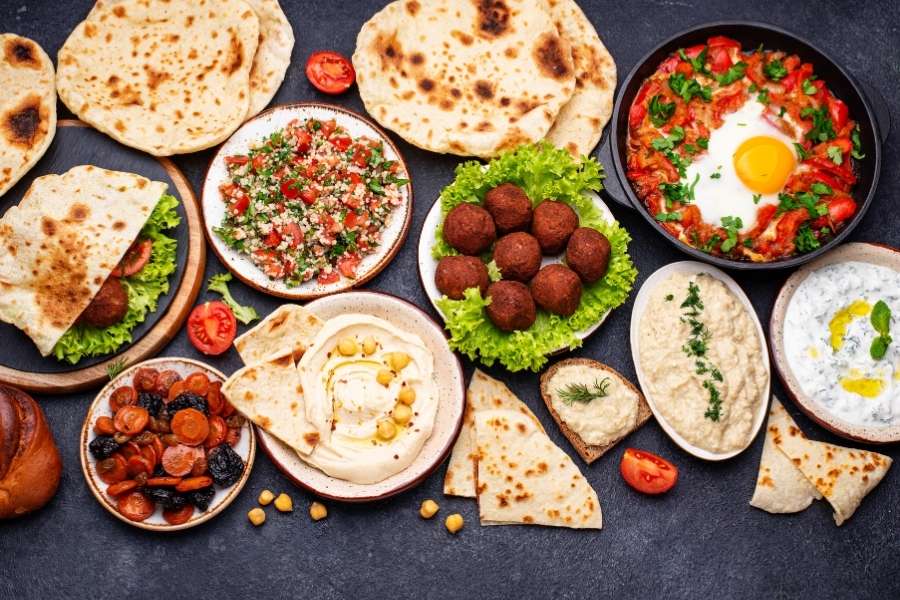
What makes Israeli cuisine particularly accommodating to plant-based diets is that many traditional dishes are naturally vegan or vegetarian. Hummus, falafel, msabbaha (warm chickpea dish), tabbouleh (parsley salad), and the ubiquitous Israeli salad (chopped cucumbers and tomatoes) all feature prominently in everyday eating and contain no animal products.
Other dishes like shakshuka (eggs in tomato sauce) can be easily adapted with tofu instead of eggs, while eggplant features prominently in various preparations from smoky baba ganoush to crispy fried slices with tahini. These plant-forward options reflect both the Mediterranean diet’s emphasis on fresh produce and the practical adaptations made to accommodate kosher laws separating meat and dairy.
Essential Israeli Dishes Every Student Should Try
Whether you’re a Mechina program student just arriving or participating in short-term exchange, experiencing Israel’s signature dishes is an essential part of cultural immersion. These foods not only satisfy hunger but tell stories of Israel’s diverse cultural heritage.
Street Food Favorites: Falafel, Shawarma and Sabich
Street food forms the backbone of Israeli casual dining, offering affordable and flavorful options perfect for students on a budget. Falafel—deep-fried chickpea balls served in pita with salads, pickles, and tahini—is perhaps the quintessential Israeli fast food and happens to be vegan. Look for shops where falafel is made fresh to order for the best experience.
Shawarma, featuring meat (typically turkey, chicken, or lamb) slow-roasted on a vertical spit and shaved into a pita or laffa bread, represents the meat-lover’s street food of choice. For something uniquely Israeli, try sabich—a pita stuffed with fried eggplant, hard-boiled eggs, tahini, Israeli salad, and amba (tangy mango sauce)—a dish brought to Israel by Iraqi Jewish immigrants.
Home-Style Dishes: Shakshuka, Couscous and Mujadara
Beyond street food, several homestyle dishes have become staples of the Israeli dining scene. Shakshuka, a comforting dish of eggs poached in a spiced tomato sauce, is the quintessential Israeli breakfast but is often enjoyed throughout the day. Couscous with seven vegetables, a North African Jewish tradition, features prominently on many family tables, especially on Fridays.
Mujadara, a simple yet satisfying combination of lentils, rice, and caramelized onions, reflects the Arabic influence on Israeli cuisine and offers an economical, protein-rich meal. These homestyle dishes can be found in small family-run restaurants called “misadot poalim” (workers’ restaurants) that offer affordable, hearty meals.
Breakfast and Brunch Culture in Israel
Israeli breakfast is renowned worldwide and differs significantly from typical Western morning fare. Rather than sweet options, expect a spread of fresh vegetables, various cheeses, olives, breads, and eggs prepared to your preference. Many cafes and hotels offer “Israeli breakfast” as their signature morning option.
The Israeli brunch culture has expanded beyond hotels to neighborhood cafes where locals linger over fresh-squeezed juices, shakshuka, and labneh (strained yogurt) with olive oil.
Navigating Dietary Needs in Israel: Practical Guide for International Students
Successfully navigating Israel’s food scene with specific dietary requirements takes a bit of preparation but is entirely manageable. With some basic knowledge and useful phrases, international students taking English-taught degrees can confidently explore Israel’s culinary offerings.
Useful Hebrew Food Terms and Phrases
Learning a few key Hebrew food terms can significantly enhance your dining experience. “Ani tzimchoni/t” (I am vegetarian) or “Ani tiv’oni/t” (I am vegan) are essential phrases for plant-based eaters. For those with allergies, “Yesh li allergiya l…” (I have an allergy to…) followed by the specific food item is important to know.
Other useful terms include “Kosher” (כשר), “Halavi” (חלבי – dairy), “Basari” (בשרי – meat), and “Pareve” (פרווה – neither meat nor dairy). Most restaurant staff, particularly in urban areas and tourist destinations, speak English, but having these phrases ready can help in smaller establishments or markets.
Finding Halal Options and Other Special Dietary Needs
Muslim students seeking halal options will find that many kosher meat restaurants effectively meet halal requirements, though certification differs. Additionally, Arab neighborhoods and cities like Nazareth, Haifa, and Jaffa offer authentic halal-certified restaurants. Apps like “HappyCow” for vegetarian/vegan options and “Kosher Near Me” can help locate suitable restaurants based on specific dietary needs.
Students with celiac disease or gluten sensitivity will find that awareness of gluten-free needs has increased significantly in Israel. Many restaurants mark gluten-free items on menus, and the prevalence of naturally gluten-free foods like hummus, falafel (when made without wheat), and fresh salads makes navigating easier than in more bread-centered cuisines.
Food Markets and Culinary Tours: Experiencing Israeli Food Culture Firsthand
For international MBA students and others seeking authentic food experiences, Israel’s vibrant markets (shuks) offer sensory adventures and opportunities to interact with local food culture directly. These bustling marketplaces are where Israelis shop for fresh ingredients and where food traditions are preserved and reinvented.
Top Food Markets in Major Israeli Cities
Jerusalem’s Mahane Yehuda Market combines traditional vendors selling fresh produce, spices, and baked goods with trendy eateries and bars. It transforms from a bustling daytime market to a lively nightlife destination after sunset. In Tel Aviv, Carmel Market offers a similar experience with more emphasis on prepared foods and street eats, while the adjacent Levinsky Market specializes in spices and international ingredients.
Haifa’s Talpiot Market and Beer Sheva’s Old City Market offer glimpses into more everyday Israeli shopping experiences, with fewer tourists and more authentic interactions. For linguistics students interested in cultural exchange, markets provide perfect opportunities to practice Hebrew and observe the multicultural nature of Israeli society.
Culinary Workshops and Cooking Classes for International Students
Many organizations offer cooking workshops specifically designed for international visitors. These hands-on experiences typically include market tours followed by cooking sessions where participants learn to prepare classic Israeli dishes. For creative writing students looking for sensory inspiration, these culinary workshops provide rich material for food writing and cultural observation.
Universities including Bar-Ilan sometimes organize culinary experiences for international students as part of cultural programming. These events offer opportunities not just to learn about food preparation but to understand the cultural contexts and stories behind the dishes, deepening students’ appreciation of Israeli society.
Conclusion: Embracing Israel’s Diverse Culinary Traditions
Israel’s food culture offers a unique lens through which international students can experience the country’s complex history, diverse population, and contemporary innovations. From ancient biblical ingredients to cutting-edge vegan cuisine, from strict kosher traditions to boundary-pushing fusion restaurants, Israeli food defies simple categorization.
For students spending time in Israel, exploring the local cuisine becomes an essential part of the educational journey—one that engages all the senses and creates memories that last long after academic lessons fade. Whether you maintain kosher dietary laws, follow a plant-based diet, or eat everything without restriction, Israel’s culinary landscape offers abundant options that satisfy both nutritional needs and cultural curiosity.
As you navigate your academic journey at Bar-Ilan University International School, take time to explore the rich flavors that make Israeli cuisine one of the most exciting food scenes in the world today. From casual falafel stands to elegant restaurant experiences, from market adventures to home-cooked meals shared with new friends, food will inevitably become one of the most meaningful dimensions of your Israeli experience.